




















Sauté Pans
Master Sautéing with Pans from Minimax
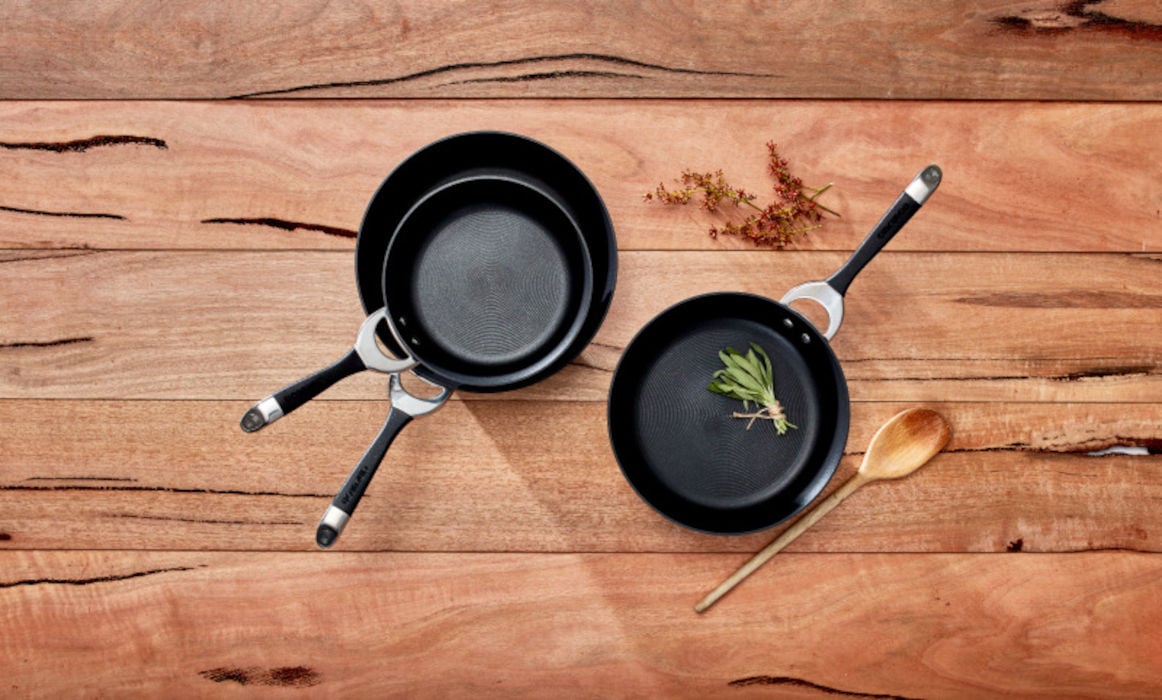
Minimax's collection of saute pans and chef pans is designed to empower every chef, from the budding enthusiast to the seasoned professional. With our chef pans, you can ensure that every flip, toss, and stir is executed with precision.
Explore our range to find the perfect fit for your culinary needs. Whether you're looking for the versatile 24cm saute pan for those quick stir-fries or the spacious 32cm saute pan for larger dishes, we've got you covered. For everything in between, our 28cm saute pan and 26cm saute pan are essentials in any kitchen, ensuring you have the right tool for every dish. Dive deeper into the Minimax cookware collection to discover a world of culinary excellence.
Sauté Pans at Minimax
Ask any experienced home cook which pan they reach for most and a sauté pan will be high on the list. It's not the flashiest piece of cookware in the kitchen, but it might be the most practical, wide enough to brown properly and deep enough to hold a sauce. Once you cook regularly with one, going back to a shallow frypan for the same job just won’t cut it.
The name comes from the French "sauter" meaning “to jump “ which captures the technique perfectly. Quick, high-heat cooking with ingredients kept moving produces better colour and texture than low, slow heat. A sauté pan's broad flat base and straight sides are specifically designed for this. The base gives maximum contact with the heat source, while the upright sides keep moisture and ingredients in the pan rather than escaping over a curved edge.
How a Sauté Pan Differs from a Frypan
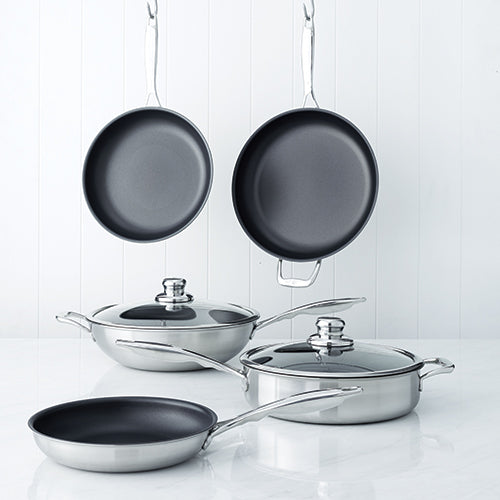
The distinction matters practically. A frypan has flared, sloping sides designed for quick tossing and easy access with a spatula. A sauté pan has straight, higher sides typically around 6–8cm deep, which makes it far better suited to dishes that involve liquid, a sauce component, or a mix of protein and vegetables cooked together. That depth also means you can start something on the stovetop and transfer it straight to the oven without losing anything over the sides, which is genuinely useful for dishes like chicken thighs with a pan sauce or a quick shakshuka.
The lid is the other key difference. Most quality saute pans with lids come included as standard, and that lid transforms the pan's capabilities entirely. You can sear, then cover to steam through, then uncover to reduce, all in one pan.
Sizing: Which Pan for Which Kitchen?
The most versatile size for a household cooking for two to four people is a 28cm sauté pan. It's large enough to cook a full meal without crowding. Crowded ingredients steam rather than brown, which defeats the purpose of sautéing, while still sitting comfortably on a standard stove top burner. A 24cm pan suits smaller households or weeknight cooking for two, while a 32cm option earns its place in kitchens that regularly feed larger groups or batch cook on weekends.
Material and Surface: What to Look For
Stainless steel sauté pans reward confident cooking. They handle high heat beautifully, develop excellent fond for building sauces, and are fully oven-safe without temperature restrictions. Essteele produces some of the most respected stainless steel options available in Australia, with their multi-layer construction delivering even heat across the entire base rather than concentrating it in the centre.
For those who prioritise easy release and minimal oil, non-stick sauté pans are a strong choice, particularly for fish, eggs, and delicate proteins. Scanpan leads this category with their ceramic titanium surface, which is notably more durable than standard non-stick coatings and rated oven-safe to 260°C. A meaningful specification when you want to finish a dish under the grill or in a hot oven.
Swiss Diamond takes a different approach with their diamond-reinforced non-stick surface, which offers exceptional scratch resistance alongside excellent food release. Their sauté pans are a favourite among home cooks who want the ease of non-stick combined with the longevity of a more robust coating.
Chef Pans: A Related Option Worth Knowing
Chef pans sit between a sauté pan and a deep frypan in terms of profile, slightly deeper than a standard frypan but with a more curved wall than a true sauté pan. They're often sold as "everyday" pans because of their adaptability across frying, sautéing, and shallow braising. If you're deciding between a sauté pan and a chef pan, consider how you cook most often: sauté pans excel when liquid or a lid is involved, while chef pans handle quicker, drier cooking with a bit more tossing flexibility. Many kitchens benefit from having both.
For those building out their cookware collection more broadly, the saucepans range covers the smaller-volume, higher-sided cooking that complements what a sauté pan does well, each has its role, and together they handle the vast majority of everyday stovetop cooking.
A sauté pan is one of those purchases that quietly improves daily cooking in a way that's hard to articulate until you have one. The combination of surface area, depth, and a well-fitted lid opens up a genuinely impressive range of dishes from a single piece of equipment and that's what good kitchen tools should do.